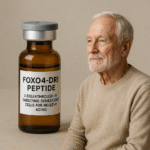
Aging is a natural process that involves the accumulation of senescent cells, which are damaged or aged cells that resist apoptosis, leading to tissue dysfunction and age-related diseases. In recent years, a synthetic peptide called FOXO4-DRI has emerged as a promising tool in senolytic therapy, with the goal of selectively eliminating these harmful senescent cells. This article explores the scientific background, mechanisms, benefits, and current research surrounding FOXO4-DRI, highlighting its potential as a groundbreaking advancement in the field of anti-aging biotechnology.
INTRODUCTION
Aging is a complex biological process influenced by a variety of factors, including the presence of senescent cells. These cells, which have ceased to divide and accumulate damage over time, play a significant role in the aging process by contributing to tissue dysfunction and the development of age-related diseases. FOXO4-DRI, a synthetic peptide derived from the FOXO4 transcription factor, has emerged as a promising candidate for targeting and eliminating these senescent cells selectively. By exploring the mechanisms and implications of FOXO4-DRI, we can gain a deeper understanding of its potential in promoting healthy aging.
Historical Background and Scientific Context
To truly grasp the significance of FOXO4-DRI in the realm of anti-aging research, it is essential to look back at the historical context of senolytic therapies. The discovery of senescent cells and their impact on aging dates back to pioneering research in the field of cellular senescence. Scientists have long recognized the role of senescent cells in promoting inflammation, tissue degeneration, and age-related pathologies. However, the development of targeted therapies to eliminate these cells remained a significant challenge until the advent of FOXO4-DRI.
The FOXO family of transcription factors, to which FOXO4 belongs, plays a crucial role in regulating fundamental cellular processes such as oxidative stress response, DNA repair, and programmed cell death (apoptosis). By specifically targeting the interaction between FOXO4 and p53, a key tumor suppressor protein involved in cell survival and apoptosis, FOXO4-DRI offers a unique approach to inducing apoptosis selectively in senescent cells. This disruptive mechanism holds immense potential for rejuvenating aged tissues and combating age-related degeneration.
WHAT IS FOXO4-DRI PEPTIDE?
FOXO4-DRI, short for Forkhead box O4 D-retro-inverso peptide, is a synthetic peptide engineered to mimic a critical region of the FOXO4 transcription factor. Unlike natural peptides, FOXO4-DRI is composed of D-amino acids in a retro-inverso configuration, enhancing its chemical stability, resistance to degradation, and ability to penetrate cellular membranes effectively. These structural modifications are essential for facilitating the therapeutic function of FOXO4-DRI within target cells.
Structural Insights and Functional Significance
The unique composition of FOXO4-DRI enables it to interact with p53 in a competitive manner, thereby disrupting the inhibitory effect of FOXO4 on p53-mediated apoptosis. By freeing p53 to initiate programmed cell death specifically in senescent cells, FOXO4-DRI offers a tailored approach to eliminating these dysfunctional cells while preserving the viability of healthy cells. This precision targeting is a hallmark of senolytic therapies and sets FOXO4-DRI apart as a promising candidate in the realm of anti-aging interventions.
HOW DOES FOXO4-DRI WORK?
Senescent cells possess a remarkable ability to evade programmed cell death, also known as apoptosis, through various mechanisms that allow them to resist the body’s natural clearance processes. One such mechanism involves the interaction between FOXO4 and p53, wherein FOXO4 acts as a molecular shield, protecting senescent cells from undergoing apoptosis by inhibiting p53’s pro-death signals. In contrast, FOXO4-DRI disrupts this shielding effect by competitively binding to p53, thereby releasing its inhibitory grip on apoptosis and prompting the selective death of senescent cells.
Cellular Dynamics and Therapeutic Implications
The selective induction of apoptosis in senescent cells by FOXO4-DRI holds profound implications for combating age-related tissue degeneration and chronic inflammation. By specifically targeting and eliminating these dysfunctional cells, FOXO4-DRI can reduce the overall burden of senescent cells in aging tissues and promote a more youthful, functional cellular environment. This targeted clearance of senescent cells not only mitigates their pro-inflammatory effects but also paves the way for enhanced tissue repair and regeneration—a critical aspect of anti-aging and regenerative medicine.
BENEFITS AND APPLICATIONS OF FOXO4-DRI
The potential of FOXO4-DRI as a transformative anti-aging therapy is underscored by a range of benefits and applications observed in preclinical studies and experimental models. These benefits include:
Selective Senescent Cell Clearance
One of the primary advantages of FOXO4-DRI is its ability to selectively eliminate senescent cells from diverse tissues, thereby mitigating their detrimental effects on the surrounding cellular milieu. This targeted clearance mechanism not only improves tissue function but also reduces the overall burden of senescent cells in aging organs and tissues.
Anti-Aging Potential
Animal studies investigating the effects of FOXO4-DRI administration have demonstrated improvements in tissue renewal, physical fitness, and organ function in aging models. By promoting the removal of senescent cells, FOXO4-DRI holds promise for enhancing the overall healthspan of individuals and delaying age-related functional decline.
Restoration of Hormonal Balance
Emerging research suggests that FOXO4-DRI may play a role in restoring hormonal balance in aging individuals by improving the microenvironment of specific organs, such as the testes. Studies have shown that FOXO4-DRI treatment can ameliorate age-related testosterone insufficiency, highlighting its potential as a holistic anti-aging intervention.
Enhanced Tissue Regeneration
By selectively targeting and eliminating senescent cells, FOXO4-DRI creates a conducive environment for tissue regeneration and repair. This regenerative potential is particularly relevant in conditions involving fibrosis, cartilage degeneration, and age-related tissue damage, where the clearance of senescent cells can facilitate tissue rejuvenation.
Potential Adjunct Therapy in Age-Related Diseases
Senescent cells are implicated in a wide range of chronic diseases, including cancer, neurodegenerative disorders, and cardiovascular conditions. FOXO4-DRI’s ability to clear senescent cells holds promise as an adjunct therapy in conjunction with existing treatments, offering a synergistic approach to managing age-related pathologies and improving therapeutic outcomes.
SCIENTIFIC STUDIES AND RESEARCH
The efficacy and safety of FOXO4-DRI as a novel senolytic peptide have been investigated through a series of scientific studies and preclinical research endeavors. These studies have shed light on the diverse therapeutic applications and mechanisms of action of FOXO4-DRI in combating cellular senescence and age-related dysfunction. Key research findings include:
Disruption of FOXO4-p53 Interaction
Groundbreaking studies by Huang et al. have elucidated the importance of targeting the FOXO4-p53 interaction as a pivotal mechanism for inducing apoptosis in senescent cells. By disrupting this molecular interaction, FOXO4-DRI effectively triggers programmed cell death in dysfunctional cells, highlighting its potential as a selective senolytic agent.
Senolytic Effects in Chondrocytes
Experimental studies focusing on chondrocytes, the specialized cells responsible for cartilage formation, have demonstrated the selective senolytic effects of FOXO4-DRI. By removing senescent chondrocytes, FOXO4-DRI promotes cartilage regeneration and function, offering new insights into the role of senolytic therapies in musculoskeletal health.
Improving Kidney Function
Research conducted in aged animal models has shown that treatment with FOXO4-DRI can restore kidney function by inducing apoptosis in senescent renal cells. This rejuvenating effect on aging kidneys underscores the therapeutic potential of FOXO4-DRI in addressing age-related organ dysfunction and promoting tissue repair.
Alleviating Hormonal Decline
Studies investigating the hormonal effects of FOXO4-DRI have revealed its ability to improve testosterone levels and testicular function in naturally aged animals. These findings suggest that FOXO4-DRI may have broader implications for hormonal rejuvenation and age-related endocrine disorders, positioning it as a multifaceted anti-aging intervention.
Hair Loss Reversal
Recent research has linked the molecular pathways modulated by FOXO4-DRI to potential anti-hair loss effects, offering new avenues for exploring its regenerative properties beyond traditional senolytic applications. The ability of FOXO4-DRI to influence hair follicle regeneration underscores its versatility in addressing age-related aesthetic concerns and promoting tissue rejuvenation.
CONSIDERATIONS AND FUTURE DIRECTIONS
While the early findings on FOXO4-DRI are promising, it is important to acknowledge that further research and development are needed to fully realize its therapeutic potential in clinical settings. Several key considerations and future directions for FOXO4-DRI research include:
Optimizing Delivery Methods
Enhancing the delivery and bioavailability of FOXO4-DRI is essential for maximizing its therapeutic effects and minimizing potential side effects. Innovations in peptide delivery systems and formulation technologies may offer new strategies for improving the clinical translation of FOXO4-DRI-based therapies.
Evaluating Long-Term Safety
Long-term studies exploring the safety profile and potential off-target effects of FOXO4-DRI in chronic treatment regimens are crucial for assessing its viability as a long-term anti-aging intervention. Rigorous preclinical evaluations and toxicity studies will help elucidate the safety parameters of FOXO4-DRI under physiological conditions.
Exploring Clinical Trials for Age-Related Diseases
Transitioning FOXO4-DRI from preclinical research to clinical trials represents a critical step in validating its efficacy and safety in human subjects. Collaborative efforts between researchers, clinicians, and regulatory bodies will be instrumental in designing and executing clinical trials that investigate the therapeutic benefits of FOXO4-DRI in age-related diseases.
Promoting Interdisciplinary Research
Fostering collaboration between biotechnologists, aging researchers, clinicians, and bioethicists is essential for advancing the field of senolytic therapy and anti-aging interventions. By integrating diverse perspectives and expertise, researchers can accelerate the translation of FOXO4-DRI and related senolytic therapies into clinical practice.
Addressing Ethical and Regulatory Challenges
As senolytic therapies like FOXO4-DRI move closer to clinical application, ethical considerations surrounding aging interventions, informed consent, and equitable access to anti-aging treatments become increasingly important. Proactive engagement with regulatory agencies, policymakers, and the public will be necessary to navigate these complex ethical challenges.
IMAGES DESCRIPTION
– A detailed diagram illustrating the interaction between FOXO4 and p53 and how FOXO4-DRI disrupts this binding to trigger apoptosis specifically in senescent cells.
– Microscopic images showing the apoptotic response of senescent cells following FOXO4-DRI treatment, highlighting the selective induction of programmed cell death in dysfunctional cells.
– Graph depicting the functional improvements in tissue vitality and physical performance observed in animal studies after FOXO4-DRI administration, underscoring its potential as a rejuvenating anti-aging therapy.
CONCLUSION
In conclusion, FOXO4-DRI represents a groundbreaking advancement in the field of senolytic therapy and anti-aging research. By selectively targeting and eliminating senescent cells, FOXO4-DRI holds immense promise for ameliorating age-related dysfunction, promoting tissue regeneration, and enhancing overall healthspan. As ongoing research continues to unravel the therapeutic potential of FOXO4-DRI, the prospects for transforming aging interventions and regenerative medicine appear increasingly hopeful.
CALL TO ACTION
Stay abreast of the latest developments in peptide therapy and senolytic research by subscribing to our newsletter. Explore our related blogs and product offerings to delve deeper into the transformative potential of peptides like FOXO4-DRI in shaping the future of anti-aging science.
—
REFERENCES:
1. Peptide Sciences: How can FOX04-DRI aid in cellular senescence
2. PMC: The role of FOXO4-DRI in senolytic therapy
3. Aging: Insights into FOXO4-DRI and age-related diseases
4. DVM360: Targeting senescent cells for tissue restoration
5. PubMed: Advances in FOXO4-DRI peptide research
6. Belgravia Centre: Anti-aging protein and hair loss reversal
7. Wikipedia: FOXO4-DRI peptide mechanisms and applications
8. Nature: Senolytic effects of FOXO4-DRI in aging tissues
—
FAQ
1. How does FOXO4-DRI peptide differ from traditional anti-aging interventions?**
FOXO4-DRI stands out for its precision targeting of senescent cells, offering a tailored approach to eliminating dysfunctional cells without harming healthy tissues. This selective mechanism sets it apart from conventional anti-aging treatments that may have broader systemic effects.
2. What are some potential side effects or risks associated with FOXO4-DRI therapy?**
While FOXO4-DRI shows promise in preclinical studies, the long-term safety profile and potential adverse effects of prolonged treatment remain areas of ongoing research. Monitoring for off-target effects and optimizing dosage regimens are critical for ensuring the safety of FOXO4-DRI-based therapies.
3. Can FOXO4-DRI be combined with existing treatments for age-related diseases?**
Yes, FOXO4-DRI holds potential as an adjunct therapy in conjunction with other treatments for age-related conditions. By targeting senescent cells and reducing their pathological impact, FOXO4-DRI may complement existing therapies and improve overall treatment outcomes.
4. Are there any ethical considerations surrounding the use of FOXO4-DRI in anti-aging interventions?**
As with any emerging anti-aging therapy, ethical considerations regarding informed consent, equitable access, and regulatory oversight play a crucial role in the responsible development and implementation of FOXO4-DRI-based treatments. Transparency and ethical guidelines are essential in navigating these complex issues.
5. What are the key challenges in translating FOXO4-DRI from preclinical research to clinical trials?**
Transitioning FOXO4-DRI from experimental models to human trials involves addressing logistical, regulatory, and safety considerations. Optimizing delivery methods, determining effective dosages, and demonstrating efficacy in clinical settings are among the key challenges in advancing FOXO4-DRI toward clinical applications.
FINAL THOUGHTS
In the pursuit of healthy aging and longevity, the discovery of FOXO4-DRI represents a significant milestone in harnessing the power of senolytic therapies to combat age-related dysfunction. By targeting senescent cells with precision and efficacy, FOXO4-DRI offers a new paradigm for rejuvenating aging tissues, promoting regenerative processes, and enhancing overall well-being. As research on FOXO4-DRI continues to evolve, its potential to reshape the landscape of anti-aging interventions remains a beacon of hope for a healthier, more vibrant future.